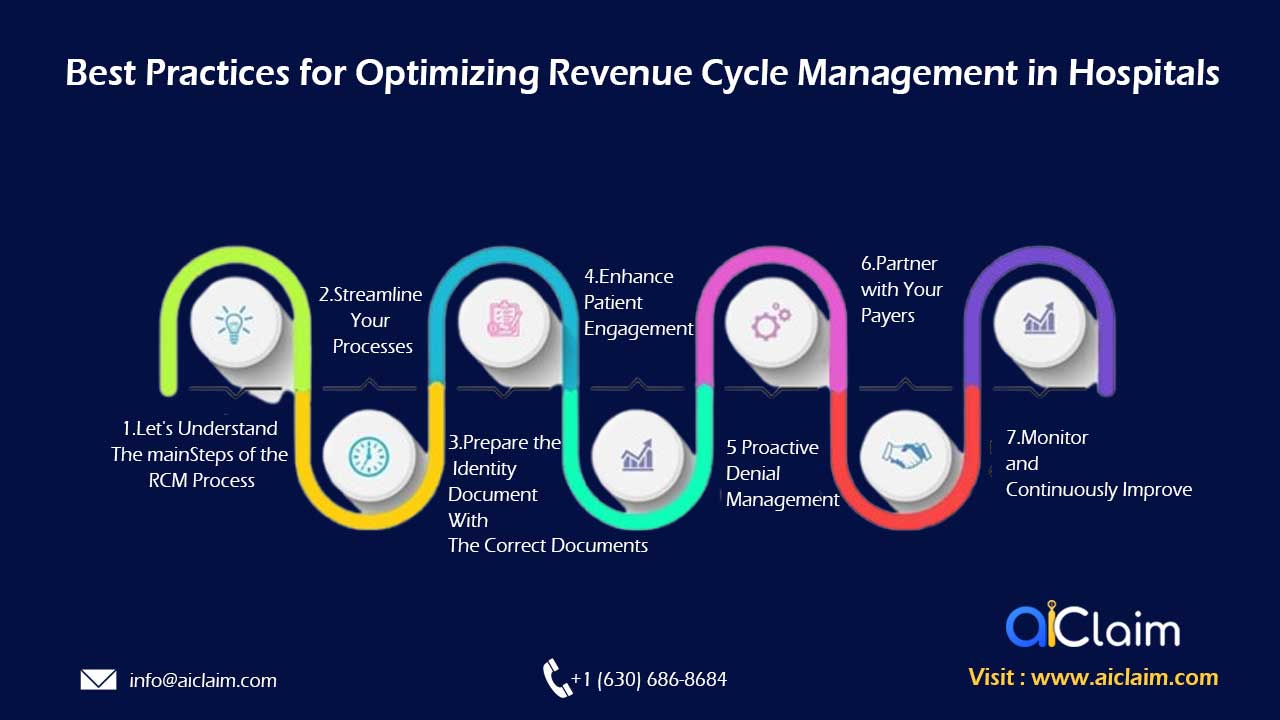
In today’s complex healthcare landscape, optimizing Revenue Cycle Management (RCM) in hospitals is critical for financial stability, operational efficiency, and improved patient satisfaction. A streamlined RCM process ensures accurate billing, reduces claim denials, and accelerates reimbursement. Below are best practices to enhance hospital revenue cycle management and maximize financial performance.
- Implement AI-Driven Automation for Efficiency
To begin with, the integration of AI-powered revenue cycle management solutions significantly enhances operational efficiency. By automating repetitive tasks such as claim submissions, medical coding, and denial management, healthcare organizations can drastically reduce manual workload. Moreover, AI-driven billing systems not only improve accuracy but also accelerate processing times. As a result, hospitals can minimize revenue leakage while simultaneously reducing administrative burdens. In addition, these intelligent systems continuously learn and adapt, thereby ensuring ongoing optimization and better financial outcomes over time.
- Improve Patient Registration and Insurance Verification
Equally important, improving patient registration and insurance verification processes plays a crucial role in reducing claim denials. In many cases, errors in patient data entry or eligibility checks lead to unnecessary delays and revenue loss. Therefore, hospitals should adopt automated verification tools to ensure data accuracy from the very beginning. Furthermore, real-time insurance validation helps confirm coverage details before service delivery. Consequently, potential issues can be identified and resolved early, which not only enhances billing accuracy but also improves overall patient experience and cash flow stability.
3. Enhance Medical Coding Accuracy and Compliance
Accurate medical coding is essential for reducing claim rejections and ensuring compliance with ICD-10, CPT, and HIPAA regulations. Investing in AI-powered coding tools and continuous staff training can help hospitals avoid coding errors and optimize reimbursement rates.
4. Optimize Claims Management to Reduce Denials
Hospitals must adopt a proactive claim management strategy by monitoring claim trends, identifying common denial reasons, and implementing solutions to address them. Leveraging predictive analytics helps forecast claim rejections before submission, allowing for timely corrections.
5. Strengthen Accounts Receivable (A/R) and Payment Posting
Reducing days in A/R (Accounts Receivable) is crucial for maintaining cash flow. Implementing an automated payment posting system ensures faster reconciliation, minimizes errors, and streamlines revenue collection. Electronic Remittance Advice (ERA) and lockbox services can further enhance payment efficiency.
6. Utilize Predictive Analytics for Revenue Forecasting
Predictive analytics plays a vital role in optimizing hospital RCM strategies by providing insights into financial performance, patient payment behaviors, and operational bottlenecks. Hospitals can leverage these insights to make data-driven decisions that improve cash flow and reduce financial risks.
7. Improve Patient Payment Experience
Hospitals should adopt patient-friendly billing solutions that offer flexible payment plans, multiple payment options, and transparent cost estimates. Enhanced patient communication regarding financial responsibilities can lead to higher collection rates and improved patient satisfaction.
8. Strengthen Compliance and Regulatory Adherence
Hospitals must stay updated with regulatory requirements such as HIPAA, ICD-10, and CMS guidelines to avoid penalties and ensure seamless reimbursements. Regular compliance audits, staff training, and automated compliance checks help mitigate risks.
9. Partner with a Revenue Cycle Management Expert
Hospitals can benefit from outsourcing RCM services to a trusted provider like AIclaim, which offers end-to-end revenue cycle solutions. RCM experts can streamline billing, coding, claims processing, and denial management, enabling hospitals to focus on patient care.
Conclusion
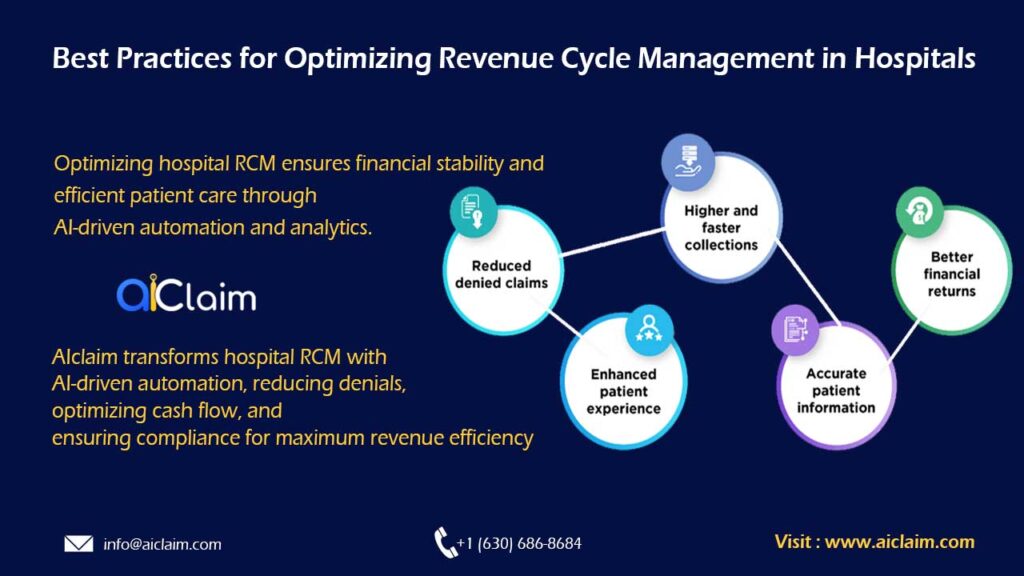
Optimizing Revenue Cycle Management in hospitals requires a strategic approach that incorporates AI-driven automation, improved patient access, accurate coding, predictive analytics, and enhanced compliance. By implementing these best practices, hospitals can increase revenue, reduce denials, improve cash flow, and enhance patient satisfaction.
???? Boost Your Hospital’s Revenue Cycle with AIclaim! ???? Visit: www.aiclaim.com ???? Email: info@aiclaim.com ???? Call: +1 (630) 686-8684
#RevenueCycleManagement #HealthcareRCM #MedicalBilling #RCMSolutions #AIinHealthcare #HospitalFinance #HealthcareAutomation